كيفية اختيار وصلة التيار المستمر ووصلة التيار المتردد في نظام تخزين الطاقة الشمسية؟
Feb 06, 2026في ظل التحول الطاقي الحالي، أصبحت أنظمة تخزين الطاقة الكهروضوئية عنصراً حيوياً في التنمية المستدامة للطاقة، وذلك لما تتمتع به من مزايا فريدة. ويُعدّ دمج الطاقة الشمسية مع أنظمة التخزين حلقة وصل أساسية لتحقيق الاستخدام الأمثل للطاقة.
اليوم، ستساعدك Sailsolar على استكشاف مفهوم حاسم بين بنيتين للربط في نظام الطاقة الشمسية: الربط بالتيار المستمر والربط بالتيار المتردد في أنظمة تخزين الطاقة الشمسية.يكمن مفتاح فهم هذين التصميمين في تحديد نقطة التقاء الطاقة من الخلايا الكهروضوئية وبطارية التخزين.
اقتران التيار المستمر: تتقارب دائرة الخلايا الكهروضوئية وبطارية التخزين على جانب التيار المستمر.
وصلة التيار المتردد: ستتقارب دائرة الخلايا الكهروضوئية وبطارية التخزين على جانب التيار المتردد.
1. بنية اقتران التيار المستمر
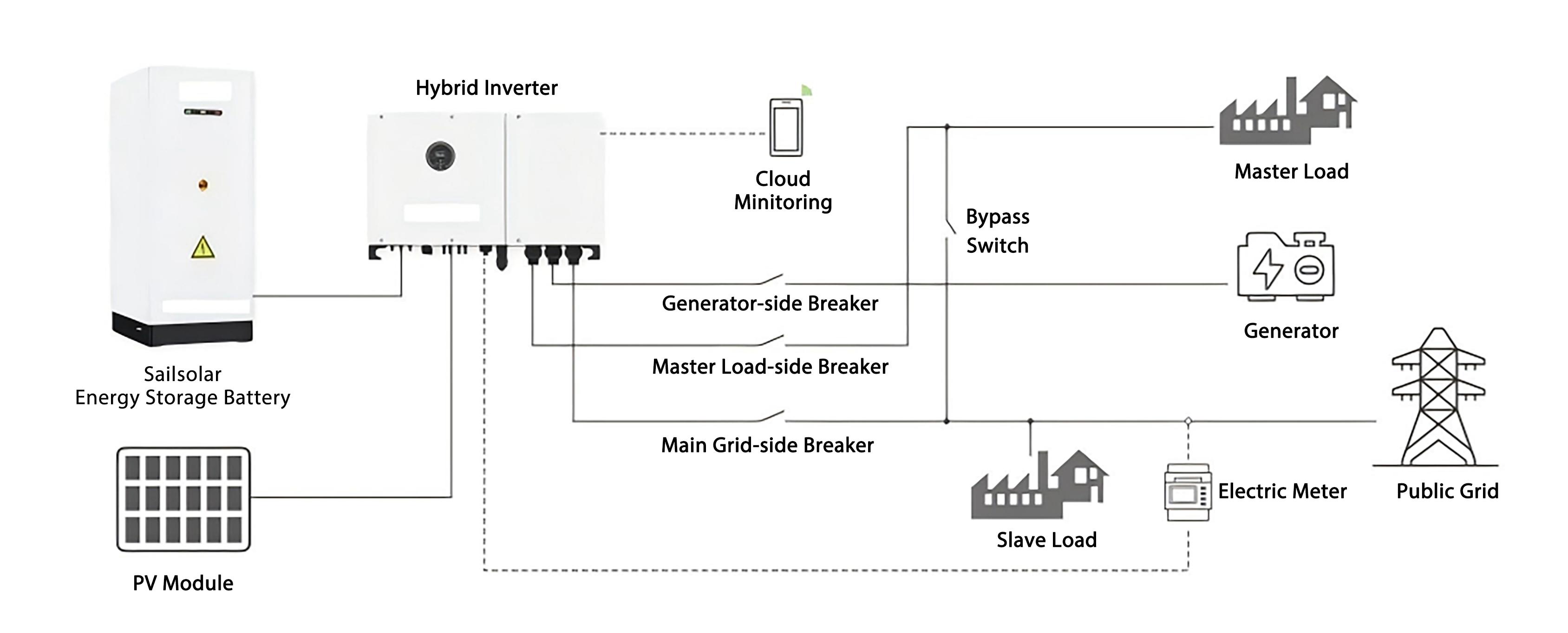
في بنية التيار المستمر المقترن، يتم تثبيت طاقة التيار المستمر من مصفوفة الخلايا الكهروضوئية بواسطة محول التيار المستمر إلى التيار المستمر داخل عاكس هجين (عاكس تخزين الطاقة الشمسية) وتغذيتها مباشرة إلى البطارية.
عند الحاجة إلى الطاقة، يمكن سحبها إما من مصفوفة الخلايا الكهروضوئية أو من البطارية. وفي كلتا الحالتين، يتم تحويل التيار المستمر إلى تيار متردد بواسطة وحدة تحويل التيار المستمر إلى تيار متردد داخل العاكس الهجين قبل تزويد الأحمال بالطاقة.
نقطة رئيسية: تبقى الطاقة بالكامل في شكل تيار مستمر عند شحن البطارية من مصفوفة الخلايا الكهروضوئية، مما يتجنب أي تحويل مفقود من التيار المستمر إلى التيار المتردد ثم إلى التيار المستمر.
2. بنية اقتران التيار المتردد
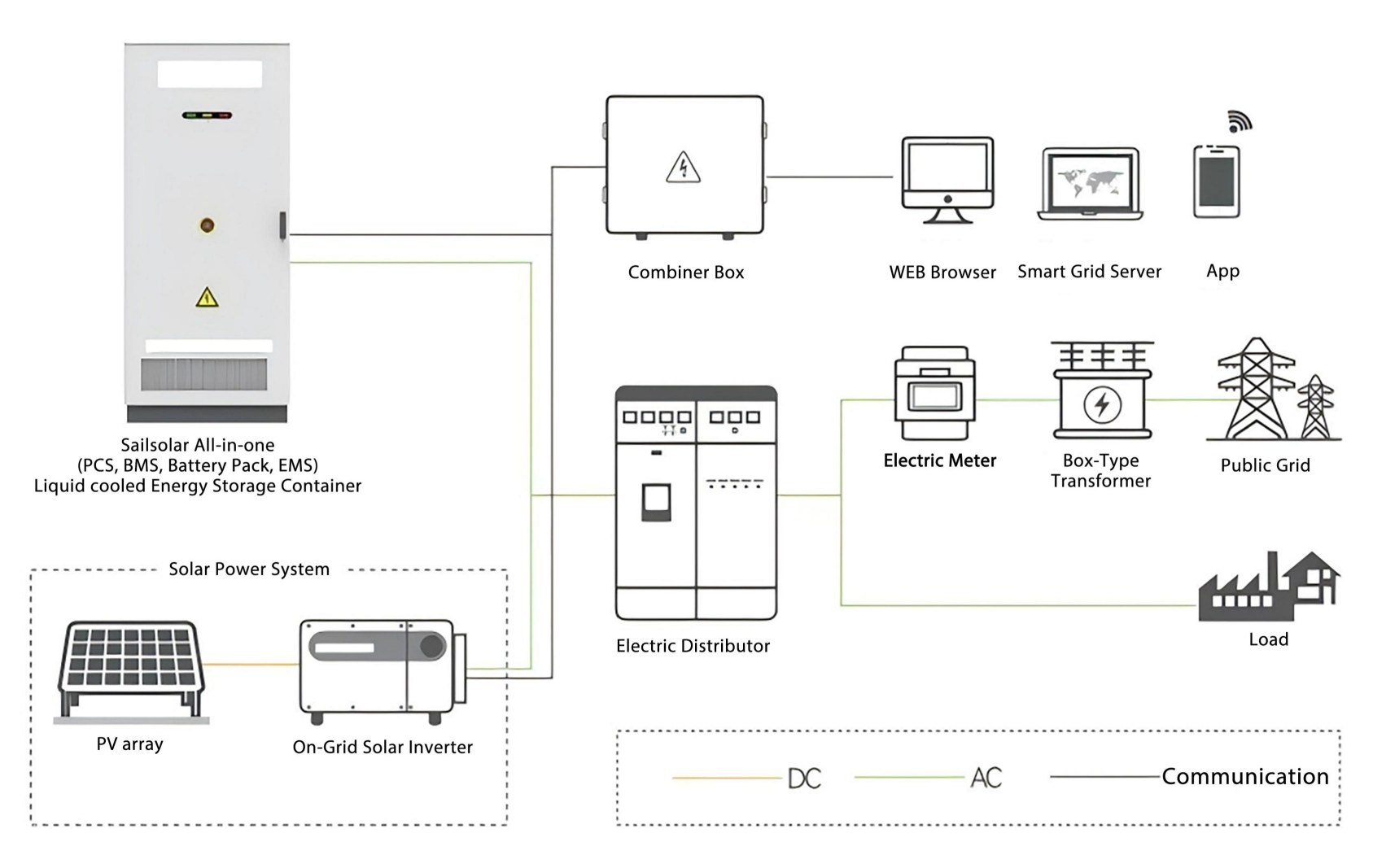
في بنية الربط بالتيار المتردد، تعمل أنظمة الخلايا الكهروضوئية وتخزين الطاقة بشكل مستقل نسبياً. يتم أولاً تحويل طاقة التيار المستمر المولدة من مصفوفة الخلايا الكهروضوئية إلى تيار متردد عبر عاكس كهروضوئي، والذي بدوره يغذي الشبكة أو الأحمال المحلية مباشرة.
إذا لزم تخزين الطاقة المترددة المحولة بواسطة العاكس الشمسي، فيجب معالجتها بواسطة نظام تحويل الطاقة (PCS) الذي يحولها مرة أخرى إلى تيار مستمر لشحن البطارية. وعند تفريغ البطارية، يقوم نظام تحويل الطاقة (PCS) بتحويل طاقة التيار المستمر من البطارية إلى تيار متردد لاستخدامها في الأحمال الكهربائية.
نقطة رئيسية: يتطلب شحن البطارية من مصفوفة الخلايا الكهروضوئية عملية تحويل من التيار المستمر إلى التيار المتردد ثم إلى التيار المستمر، كما أن تزويد الأحمال بالطاقة يضيف عملية تحويل أخرى من التيار المستمر إلى التيار المتردد.
3. مقارنة بين كلا المعماريين
(1) مسار تدفق الطاقة وخطوات التحويل
اقتران التيار المستمر: يمكن للطاقة المستمرة المولدة بواسطة وحدات الخلايا الكهروضوئية شحن البطارية مباشرة (DC-DC)، دون الخضوع لتحويل DC-AC-DC، مما يؤدي إلى انخفاض فقد الطاقة.
الربط بالتيار المتردد: يتطلب تخزين الطاقة الكهروضوئية تحويلًا ثنائي المراحل (تيار مستمر - تيار متردد - تيار مستمر). عند الاستخدام النهائي، تخضع الطاقة لثلاث مراحل تحويل، مما يؤدي إلى خسائر طاقة أعلى نسبيًا.
(2) معدات النظام والتكلفة
وصلة التيار المستمر: تستخدم عاكسًا هجينًا متكاملًا (أو عاكس تخزين الطاقة الشمسية)، يجمع بين تتبع نقطة الطاقة القصوى للخلايا الكهروضوئية، والتحويل ثنائي الاتجاه، وإدارة البطارية. هذا يقلل من عدد المكونات المطلوبة وكابلات التوصيل، مما يخفض الاستثمار الأولي. كما أن قلة المكونات تعني انخفاض تكاليف التركيب والصيانة.
التوصيل بالتيار المتردد: يتطلب محولات طاقة شمسية منفصلة ومحول بطارية (PCS)، بالإضافة إلى لوحة توزيع تيار متردد مناسبة. يؤدي ازدياد عدد المكونات إلى زيادة تكاليف الكابلات ويتطلب مساحة تركيب أكبر.
(3) نسبة التيار المستمر إلى التيار المتردد (نسبة تحميل العاكس)
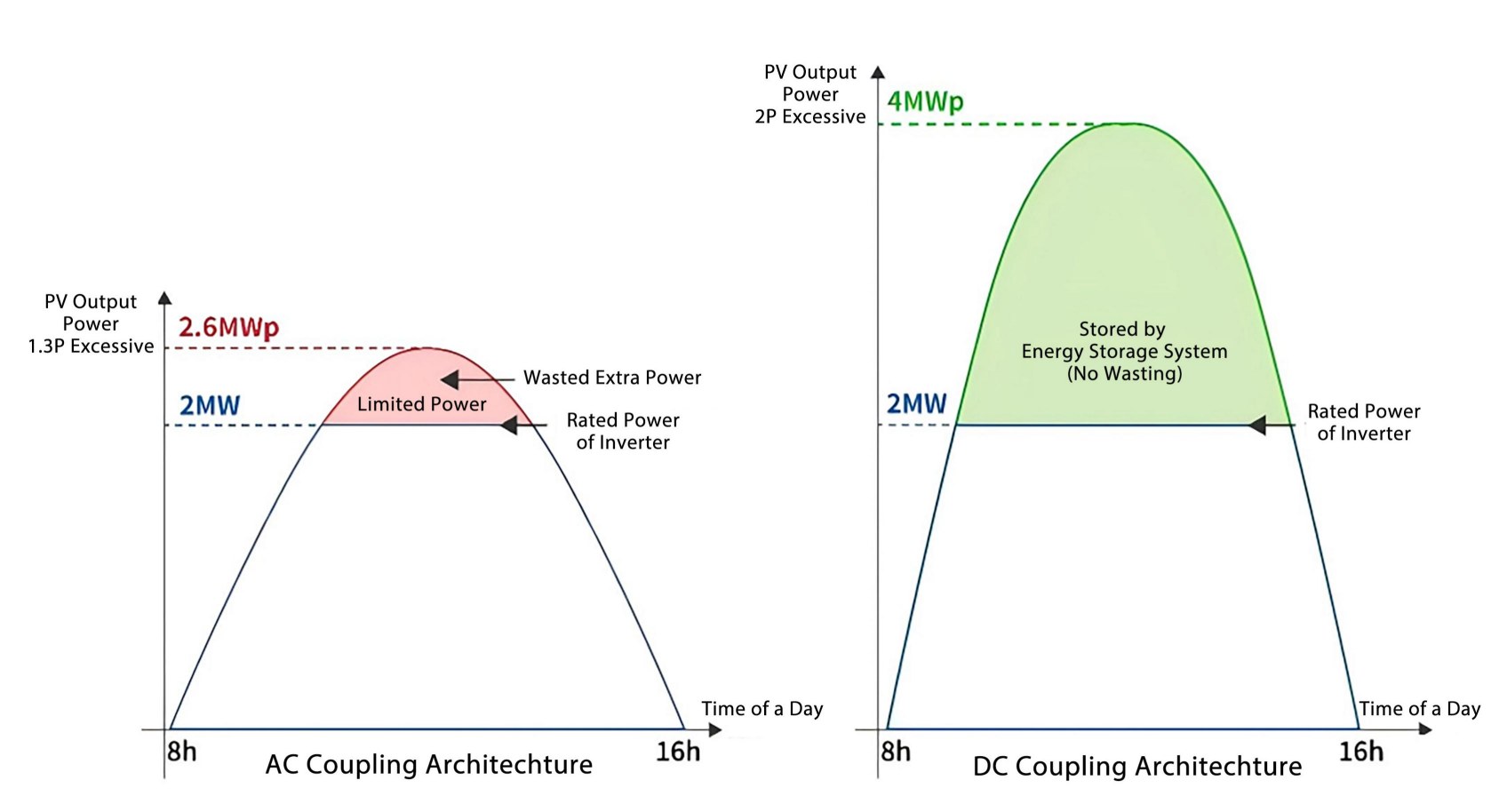
بافتراض سعة محول المصنع 2.5 ميجا فولت أمبير، فإن إجمالي خرج العاكس عادة ما يكون محدودًا بنسبة 80٪ من تلك السعة (حوالي 2 ميجا واط) من أجل التشغيل الآمن.
اقتران التيار المستمر: يمكنه دعم مصفوفة كهروضوئية بقدرة 4 ميجاوات. إذا كانت المصفوفة الكهروضوئية تولد 4 ميجاوات من الطاقة، فيمكن أن يتدفق 2 ميجاوات مباشرة إلى البطارية للشحن عبر ناقل التيار المستمر (عملية تحويل التيار المستمر إلى تيار مستمر).
يتم تحويل الطاقة المتبقية البالغة 2 ميغاواط بواسطة نظام تحويل الطاقة (PCS) داخل العاكس الهجين، وتُخرج على شكل 2 ميغاواط من الطاقة الكهربائية المترددة. ويمكن توزيع هذه الطاقة الخضراء المخزنة خلال ساعات الذروة المسائية، مما يزيد من الاستفادة من الطاقة الشمسية لتلبية الطلب المتزايد للشركات على الطاقة المتجددة.
اقتران التيار المتردد: يعتمد توليد الطاقة الكهروضوئية بشكل أساسي على قدرة محول التيار الكهروضوئي. عند نسبة تحويل التيار المستمر إلى التيار المتردد 1.3، يمكن تركيب منظومة كهروضوئية بقدرة 2.6 ميجاواط ذروة. إذا ولّدت هذه المنظومة 2.3 ميجاواط تيار مستمر، فإن محول التيار المتردد بقدرة 2 ميجاواط سيحد من الإنتاج، مما يؤدي إلى تقليل توليد الطاقة الكهروضوئية وهدر الطاقة الشمسية.
(4) توافق النظام وقابليته للتوسع
وصلة التيار المستمر: تتميز بتكامل عالٍ بين أنظمة الطاقة الشمسية الكهروضوئية وأنظمة التخزين. مع ذلك، فهي غير متوافقة بشكل جيد مع أنظمة الطاقة الشمسية الكهروضوئية القائمة، وغالبًا ما تتطلب استبدال العاكس الأصلي. كما أن توسيع النظام مقيد بأقصى قدرة دخل/خرج للعاكس الهجين ومواصفات منفذ البطارية.
وصلة التيار المتردد: توفر سهولة في تحديث أنظمة الطاقة الشمسية الكهروضوئية القائمة، حيث يمكن إضافة وحدات تخزين عن طريق توصيل عاكس البطارية والبطاريات بالتوازي على جانب التيار المتردد. كما تتيح مرونة في اختيار المعدات من مختلف العلامات التجارية وتوفر قابلية توسع أكبر.
4. كيفية اختيار حلول توصيل التيار المتردد والتيار المستمر
(1) اقتران التيار المستمر: سيناريوهات مثل إنشاء نظام تخزين الطاقة الشمسية الجديد، والسعي لتحقيق كفاءة تحويل أعلى ونسبة التيار المستمر إلى التيار المتردد، وحيث تكون مساحة التركيب محدودة إلى حد ما.
(2) اقتران التيار المتردد: سيناريوهات مثل إضافة تخزين الطاقة إلى أنظمة الطاقة الشمسية الكهروضوئية الحالية، مما يتطلب التوافق مع المعدات من علامات تجارية متعددة، والتكامل الهجين لمصادر الطاقة المتعددة.
لكل طريقة مزاياها وعيوبها، ولا يوجد خيار أمثل واحد يناسب جميع السيناريوهات. يجب أن يستند الاختيار العملي إلى تقييم شامل لظروف المشروع ومتطلباته الخاصة. ومع استمرار تطور كلتا التقنيتين، فإنهما تعدان بتقديم مجموعة متزايدة الاتساع من الحلول، مما يمكّن المستخدمين من اتخاذ الخيار الأمثل لمستقبلهم الطاقي الفريد.
هاتف : +86 -18655186412
بريد إلكتروني : Inquiry@sailsolarpv.com
Whatsapp : +86 -18655186412
Add : Building 7, Cross Border E-Commerce Supervision Zone, Hefei, China


© 2026 شركة سيل للطاقة الشمسية المحدودة كل الحقوق محفوظة
|خريطة الموقع |XML| سياسة الخصوصية